Air Strike Force: 1945 WWII
Shooter Games and FPSComics
3.93.00 Reviews
- Version
- 1.7
- Installs
- 10.00K
- Age Rating
- Everyone 10+
Screenshots
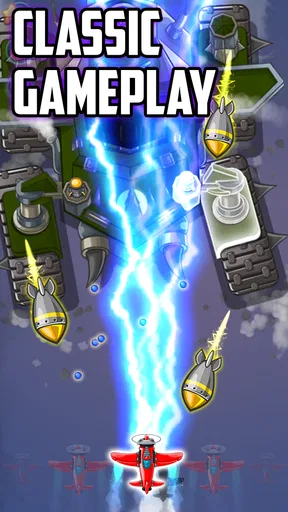
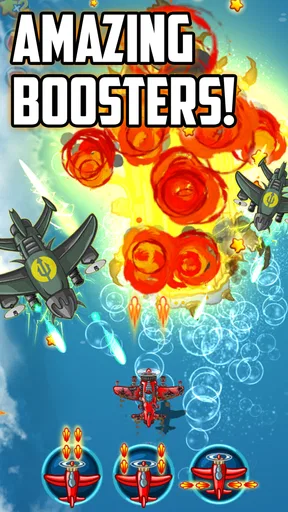
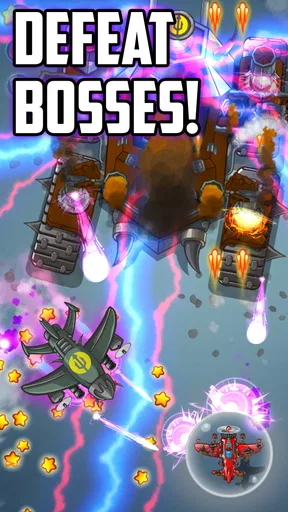
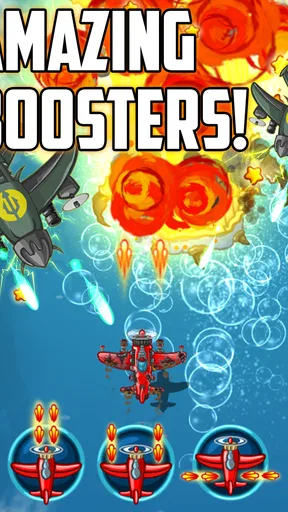
Our Review of Air Strike Force: 1945 WWII
 Analysis by Appyee
I approached Air Strike Force: 1945 WWII as a quick mobile comics experience rather than assuming its aviation-themed presentation would work like a full flight simulator. Its store positioning points toward an air-combat mission fantasy, while its placement in the Comics category gives it a different feel from the usual action games built around long campaigns, detailed controls, or competitive progression. That distinction matters before downloading: this is best suited to someone who wants a light, immediately understandable way to spend a few spare minutes with a wartime sky theme.
The app is free to install, which makes trying it low-risk, although optional in-app purchases range from under a dollar to several dozen dollars per item. I would keep that in mind before handing the phone to a younger player, even though the content rating is Everyone 10+. The current release is version 1.7 and requires iOS 11 or later, so compatibility is reasonably approachable for users with an older supported Apple device.
From a spare moment to a short air-combat session
I find this kind of app easiest to judge in the short gaps of an ordinary day: a quick launch, a little air-combat action, then back to whatever I was doing. In this section, I look at how that pace shapes the first session and what I’d pay attention to before making it part of my routine. That leads naturally to the more important test: whether it still feels comfortable when I play for longer.
What I expected before starting
The first useful decision is setting the right expectation. The name Air Strike Force: 1945 WWII suggests a historical aviation setting, but the available presentation is much closer to a compact, accessible action experience than a serious recreation of wartime flying. I would not choose it for authentic aircraft research, a detailed campaign narrative, or the kind of cockpit management found in a dedicated simulator. I would choose it when the appeal is simple: open the app, get into the action, and enjoy an uncomplicated sky mission without committing to a long session.
That makes the starting condition important. If I am waiting for a bus, taking a short break, or looking for something that does not require a large amount of preparation, the app has a clear advantage over more demanding alternatives. A realistic flight title may offer deeper controls, but it also asks me to learn more, manage more screens, and invest more attention. This app’s appeal is the opposite: it aims to reduce the distance between opening the app and feeling like I am doing something.
There is also a useful difference between the app’s category and its subject. Because it is presented as a comics app, I would approach it with a lighter, more visual mindset. Someone searching specifically for comic reading, panels, or a library of serialized stories may find the wartime air-action concept unexpected. In contrast, someone who enjoys illustrated military themes and wants a casual interactive diversion may appreciate the unusual combination.
How the first session fits into everyday use
My practical workflow would begin with a short test rather than immediately considering any purchase. I would install it, check how comfortable the controls feel on my device, play through an initial mission or sequence, and then decide whether the basic loop is enjoyable without spending money. That is especially sensible here because the free entry point lets the app prove its value before optional purchases become relevant.
A realistic scenario would be a ten-minute break during a commute. I would launch the app, complete a compact air mission, and close it without needing to remember a complicated story or prepare a squad. If the session ends with a clear sense of progress or a satisfying visual payoff, the app has done its job. If I find myself waiting through menus or repeating the same action without a meaningful result, I would stop there rather than treating the free download as a reason to continue indefinitely.
I also recommend using the first session to judge visibility and control comfort. Air-themed action can become frustrating when targets, hazards, or movement cues are difficult to read on a small screen. Rather than assuming that a dramatic presentation automatically equals good playability, I would test it in the exact environment where I plan to use it: handheld, possibly with distractions, and not necessarily with headphones.
The step-by-step flow I would use
Start with the free experience. I would avoid treating the purchase options as part of the required setup. The sensible first step is to discover whether the core air-strike activity is enjoyable on its own.
Learn the interaction through repetition. Instead of trying to master everything immediately, I would focus on the basic relationship between movement, aiming, and completing the current objective. A short action app is more welcoming when I can build muscle memory one attempt at a time.
Use brief sessions to identify the real loop. After several missions or sequences, I would ask whether the app is giving me new decisions or simply asking me to repeat the same gesture. That distinction separates a pleasant time-filler from an experience that becomes stale quickly.
Evaluate progress before considering extras. If the free path feels satisfying, optional purchases may be easier to judge. If the basic path already feels thin, paying for more content or advantages is unlikely to fix the underlying problem.
This order also helps answer a question many players have: do I need to be an aviation enthusiast to enjoy it? In my view, no. The historical framing provides atmosphere, but the app is more approachable when treated as casual air action rather than a technical examination of aircraft, tactics, or military history. Enthusiasts may enjoy the theme, but they should keep their expectations modest if accuracy and depth are their main priorities.
Where handoffs can feel smooth or awkward
The main handoff is from the app’s visual promise to its actual interaction. A dramatic title can make me expect a broad campaign, but the real test is what happens after the opening presentation: can I understand what to do, perform it comfortably, and see why the result matters? A successful handoff keeps the theme in the background while making the next action obvious. A weak one leaves me admiring the concept but unsure whether the activity has enough substance.
Another handoff occurs between one short session and the next. Casual apps work best when I can return without reconstructing a complicated plan. If I have to remember several systems or spend too much time navigating before reaching the sky, the experience loses its advantage over a more substantial game. For my own use, I would favor the app on days when I want a contained activity, not when I am looking for a deep progression project.
The final handoff is from free play to optional spending. The listed purchase range is broad enough that I would be deliberate about it, especially on a shared device. I would first identify what a purchase changes in my experience and whether it removes a genuine obstacle or merely accelerates progress. A good rule is to wait until I have returned to the app several times without prompting myself to buy anything. Repeated voluntary use is a better signal of value than excitement during the first launch.
What the outcome feels like
The strongest result is convenience. Air Strike Force: 1945 WWII can occupy the gap between a fully developed game and a passive comic-style app. I can approach it without a large learning commitment, enjoy the aviation theme, and leave after a short session. That makes it a reasonable recommendation for casual players who prefer direct action and do not want to build a long-term routine around a game.
Its audience is also fairly specific. I would suggest it to someone who likes illustrated World War II settings, wants a free starting point, and is comfortable judging a title by short-session enjoyment rather than by narrative depth. It may also suit a younger player within the age guidance when an adult has already considered the optional purchase settings and the child’s tolerance for action imagery.
I would be more cautious recommending it to a reader searching for a traditional comics reader. The category may attract people expecting panels, chapters, reading controls, and a catalog of stories. Those users should examine the app’s actual interactive focus before assuming that the label means a conventional reading experience. Likewise, a flight-simulation fan may prefer a specialist alternative with more detailed aircraft handling, historical information, or strategic systems.
The public response gives a mixed but not alarming signal: the app holds an average rating of about 3.9 from roughly a hundred ratings, with only a handful of written reviews. I read that as evidence of a modest user base rather than a decisive verdict. The rating is good enough to justify trying the free version, but not strong enough for me to recommend paying immediately without personal testing.
Three practical insights that changed how I would use it
First, I would treat the app as a session-based experience and not force it into a long-play schedule. This is a useful trade-off: short access lowers commitment, but it also means repetition becomes noticeable sooner. Playing only when I genuinely want a quick air-action break may preserve the novelty better than grinding through every available activity in one sitting.
Second, I would use the free version as a diagnostic tool. Instead of asking whether the theme looks appealing, I would watch for three concrete signs: whether I understand the objective without searching for help, whether controlling the aircraft feels comfortable after a few attempts, and whether finishing a sequence gives me a reason to start another. Those observations reveal more than the title or promotional wording.
Third, I would separate atmosphere from historical trust. The 1945 setting can make the experience feel distinctive, but I would not use it as a substitute for a history app or an educational reference. If I wanted authentic aircraft specifications or carefully explained events, I would choose a dedicated history source and keep this app for entertainment. That separation prevents disappointment and makes its strengths easier to appreciate.
A fourth point is device sharing. Because the app is free but includes optional items with a high upper price, I would check purchase controls before letting a child use it. The Everyone 10+ rating helps describe the intended age range, but it does not replace a parent’s judgment about spending or screen time. For a personal device, I would still avoid buying anything until the free loop has demonstrated lasting appeal.
Where the workflow breaks down
The biggest possible break is a mismatch between what I want and what the app is designed to provide. If I arrive expecting a full World War II campaign, complex flight physics, or a substantial comics library, the compact format may feel underdeveloped. That is not necessarily a flaw in a casual title, but it is a clear reason to choose another option when depth is the priority.
Repetition is the second risk. A short-session design can be convenient, yet the same convenience can expose a limited activity loop. If missions do not introduce enough variation, the initial excitement of the air-strike theme may fade. I would therefore make the keep-or-delete decision after several separate sessions, not after the first attractive launch.
The purchase transition is another point where I would slow down. Optional items between a small amount and a much larger amount can make the free experience feel less straightforward if I am not paying attention. My approach would be to enjoy the app without assuming that spending is necessary, then make a specific decision only when I understand what the item contributes. If the purchase feels like a shortcut around frustration rather than an improvement to enjoyment, I would skip it.
Finally, the category mismatch may create practical confusion. A reader who wants comics in the usual sense should not download this solely because of the category label. Conversely, a casual player looking for accessible aviation action may find that the comics association makes the app harder to classify at first. I would describe it to a friend as a free, illustrated air-combat diversion with a World War II theme, not as a replacement for a dedicated comic reader or flight simulator.
My recommendation after following the full workflow
After moving from installation to short missions, evaluating the handoffs, and considering where the experience can lose momentum, I see Air Strike Force: 1945 WWII as a cautious recommendation. Its free entry point, approachable theme, and compact-session potential make it worth trying for casual users. The developer, Shooter Games and FPS, has positioned it around an immediately recognizable sky-action idea, and the current version gives interested players a straightforward way to see whether that idea works for them.
I would recommend downloading it if you want a low-commitment aviation-themed app, enjoy visual action, and are willing to judge it on quick entertainment rather than simulation depth. I would skip it if you need a complete historical lesson, a conventional comic-reading library, or a highly detailed flight model. In my experience, the best way to use it is simple: start free, test the controls, play across more than one short session, and keep your spending decision separate from the excitement of the first launch. Its real value is in providing an easy, themed break—not in replacing a deeper game or a serious comics app.
Verdict
Strengths of Air Strike Force: 1945 WWII
- Fast-paced WWII aerial combat that is easy to pick up.
- Varied missions keep the campaign from feeling repetitive.
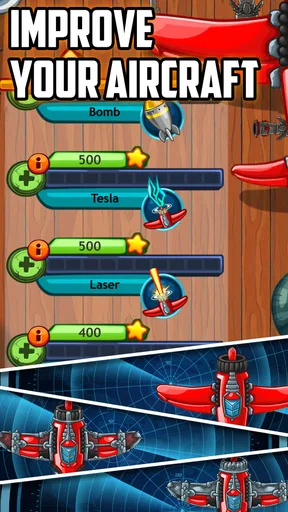
- Multiple aircraft provide different play styles and upgrade paths.
- Short levels suit quick gaming sessions on mobile.
- Classic war setting appeals to fans of arcade flight shooters.
Limitations of Air Strike Force: 1945 WWII
- Frequent combat can feel repetitive after extended play.
- Progress may depend heavily on upgrading aircraft and weapons.
- Some missions offer limited freedom beyond fixed objectives.
- Touch controls may feel less precise during crowded battles.
- Ads or in-app purchases may interrupt the free-to-play experience.
Similar Picks in This Category
View All
WEBTOON: Manga, Comics, Manhwa
NAVER WEBTOON4.6

MangaToon: Comic & Manga
MangaToon4.3

네이버 웹툰 - Naver Webtoon
NAVER WEBTOON4.3

Tapas – Comics and Novels
Tapas Entertainment Inc.4.2

Lezhin Comics - Daily Releases
LEZHIN ENTERTAINMENT3.3

WebComics - Webtoon & Manga
WEBCOMICS HOLDINGS HK LIMITED4.4
Frequently Asked Questions
What is Air Strike Force: 1945 WWII?
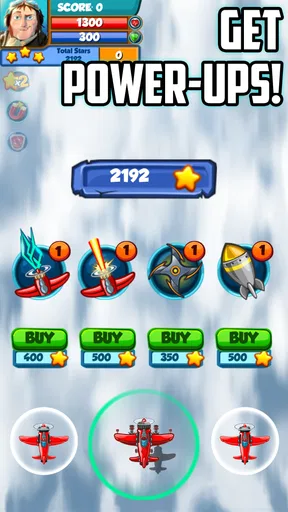
Air Strike Force: 1945 WWII is an arcade-style mobile shooter inspired by classic World War II air-combat games. You control a fighter aircraft, battle enemy planes and ground targets, collect power-ups, and try to survive increasingly difficult missions. Its fast, straightforward gameplay makes it suitable for players who enjoy quick action rather than a highly realistic flight simulator.
How does the gameplay work?
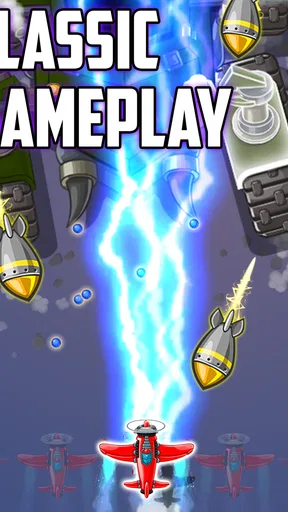
The game focuses on simple, accessible controls designed for touchscreens. Your aircraft moves across the battlefield while weapons fire automatically or with minimal input, allowing you to concentrate on positioning, avoiding enemy attacks, and choosing the best moment to use special abilities. Missions generally become more challenging over time, with heavier enemy waves, stronger bosses, and more demanding movement patterns.
Can I play Air Strike Force: 1945 WWII offline?
Many of the core shooting missions can generally be enjoyed without a constant internet connection, which is convenient when traveling or playing in areas with weak reception. However, certain features may depend on connectivity, including advertisements, online rewards, updates, purchases, or progress synchronization. It is best to launch the game online at least once and check which modes remain available after switching to offline play.
Is Air Strike Force: 1945 WWII free to download and play?
The game is typically available as a free download, but free access may be supported by advertising and optional in-app purchases. Progress can often be improved by upgrading aircraft, weapons, or other equipment, while some resources may be earned through regular play. Before downloading, users should review the store listing for the current purchase options and consider whether the upgrade system suits their preferred play style.
Is the game suitable for all players and devices?
Air Strike Force: 1945 WWII is generally easy to understand and can appeal to casual players, arcade fans, and anyone who enjoys short action sessions. Nevertheless, performance depends on the phone or tablet, especially during busy battles with many effects on screen. Younger players may also encounter advertising or optional purchases, so parents should review the app’s age rating, permissions, and available purchase controls before installation.
